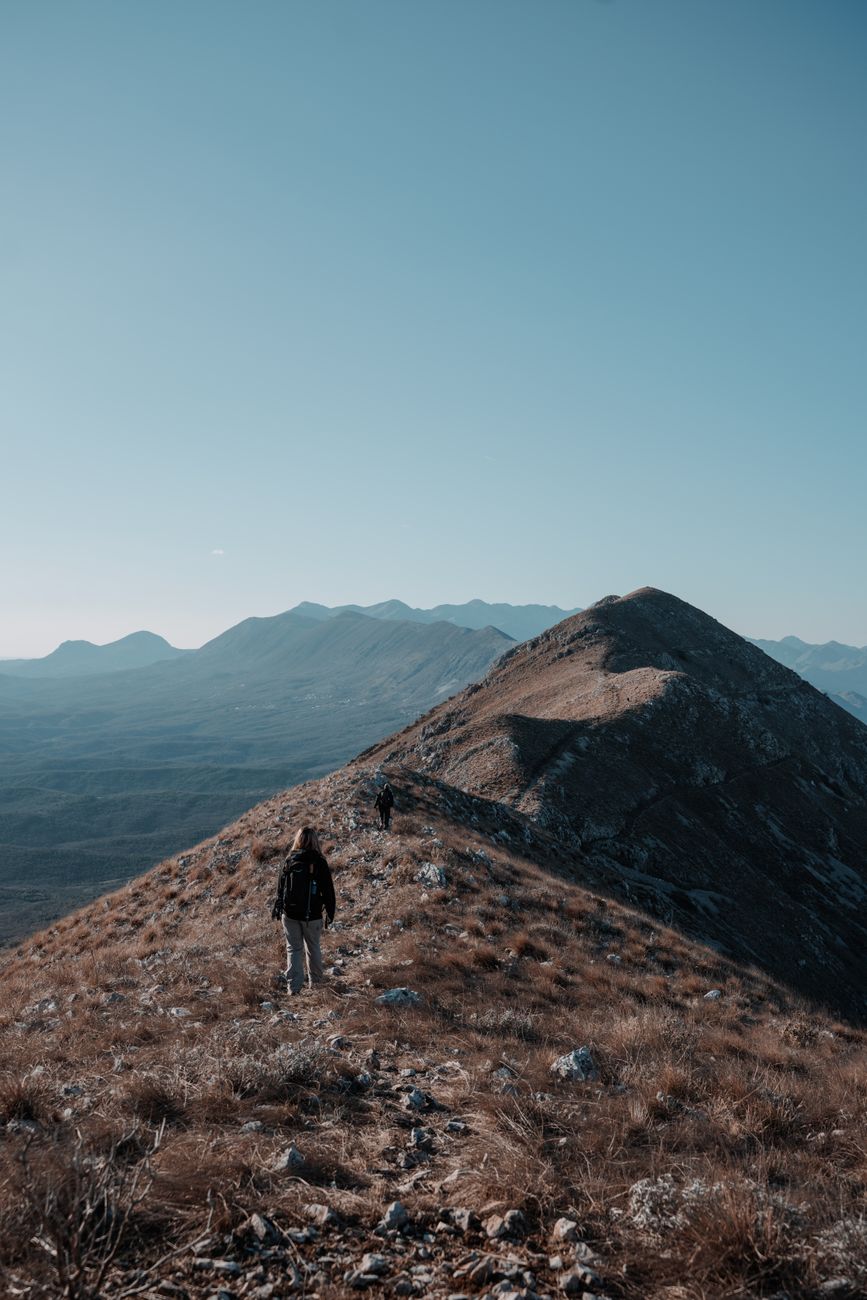
The morning starts below freezing at 2,400 meters. The air tastes of granite dust and cold pine. In an era dominated by cable cars and instantaneous viewpoints, there is immense redemption in arriving only at the speed of one’s own breath.
1. The Rhythm of the Incline
Ascending an Alpine pass demands that you abandon urban urgency. One does not conquer mountains; one conforms to their contours. Each stone placed beneath your boot is a tactile lesson in presence. Far above the timberline, the chatter of mechanical civilization drops away until the only acoustics remaining are the wind cutting against jagged dolomite limestone.
“When you carry only what you need on your shoulders, the boundary between the landscape and your thoughts begins to dissolve.”
2. Shelters and Warm Porridge
In the late afternoon, arriving at a traditional rifugio offers an unmatched simplicity of luxury: wood-paneled communal dining tables, steaming polenta with wild mushrooms, and fellow hikers comparing handwritten maps. No screens, no high-gloss entertainment—only the shared warmth of shared physical endeavor.
Practical Preparations for the Route
- Footwear: Broken-in leather boots with Vibram soles; never start a ridge traversal in untested gear.
- Water strategy: Minimum two liters carried plus an inline micro-filtration straw for clean glacial melt streams.
- Weather awareness: Alpine storms formulate rapidly after 14:00; arrange early morning starts before sunrise.
The descent into the valley leaves one renewed, with senses recalibrated to subtlety. This is the heart of 111111: journeying not to escape life, but to ensure that life does not escape us.